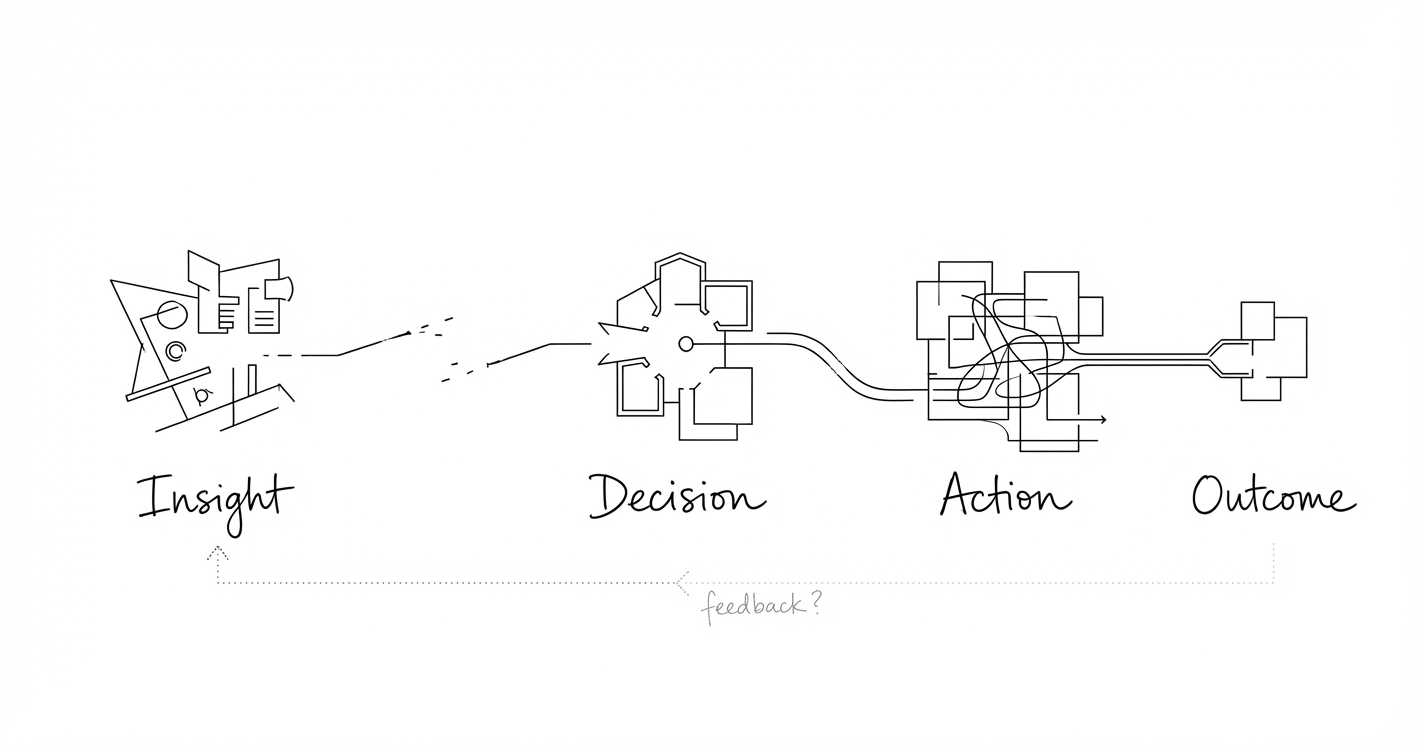
Every organisation hits a ceiling on how many good decisions it can make in a given period. Not because people aren’t smart. Not because data doesn’t exist. But because the work of turning data into decisions doesn’t scale the way other things do.
How decisions get made
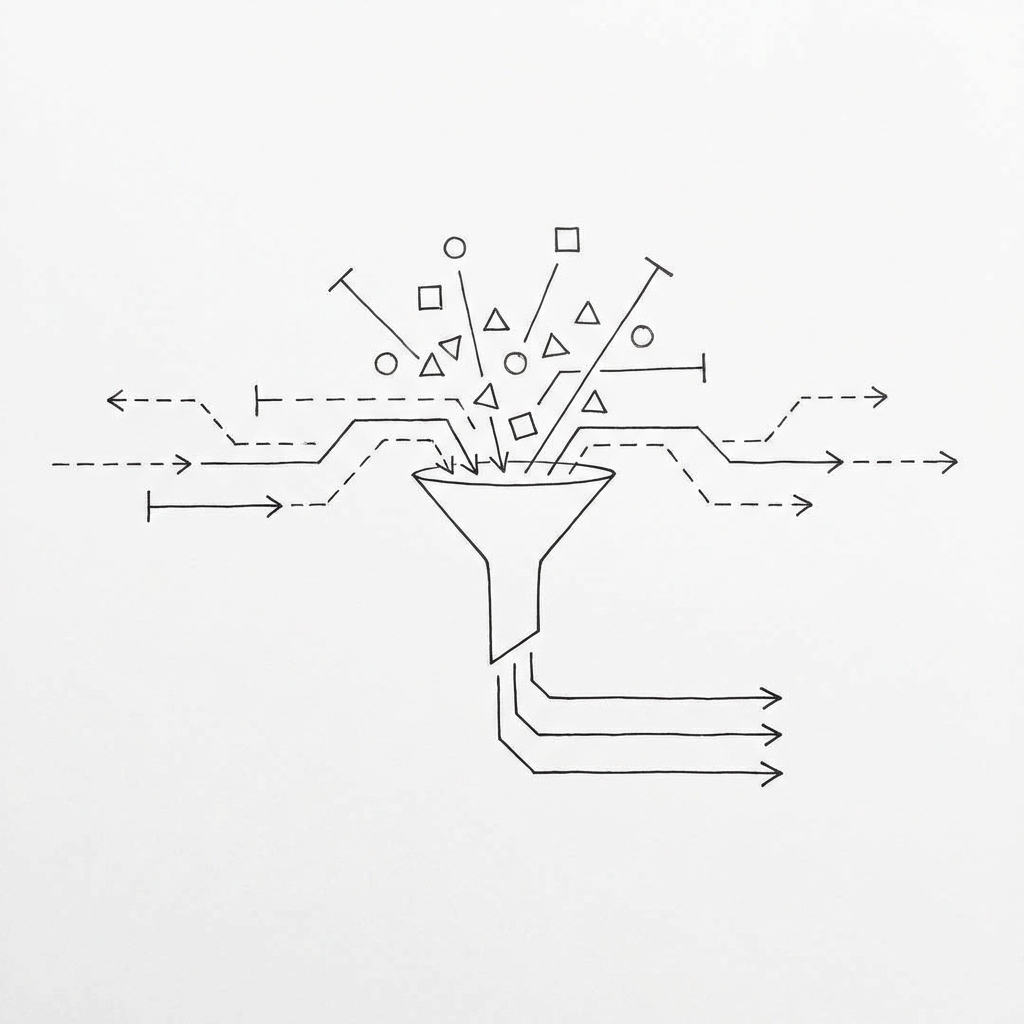
Someone notices a problem or opportunity. They request data. An analyst pulls a report, maybe several. The data arrives, but it doesn’t quite answer the question, so there’s back-and-forth. Eventually, enough context is assembled that a decision maker can weigh the trade-offs and make a call.
None of these bottlenecks are about data availability. The data exists. The bottleneck is synthesis: combining multiple sources, adding context, weighing trade-offs, arriving at a recommendation. Synthesis is skilled work. It requires judgment. It’s hard to delegate. And because it’s hard to delegate, it concentrates in a small number of people who become organisational chokepoints.
The symptoms

You can recognise the synthesis bottleneck by its symptoms.
Decisions take longer than they should. Not because the decision is genuinely complex, but because assembling the evidence takes time. A question that should take an hour takes two weeks because it queues behind other requests.
Heroic individuals become critical paths. The person who “knows where all the bodies are buried” becomes indispensable. When they’re on holiday, decisions wait.
Senior time gets consumed by interpretation work. Leaders spend their days in meetings explaining what the numbers mean, when their time would be better spent on decisions that actually require their judgment.
Why dashboards aren’t enough
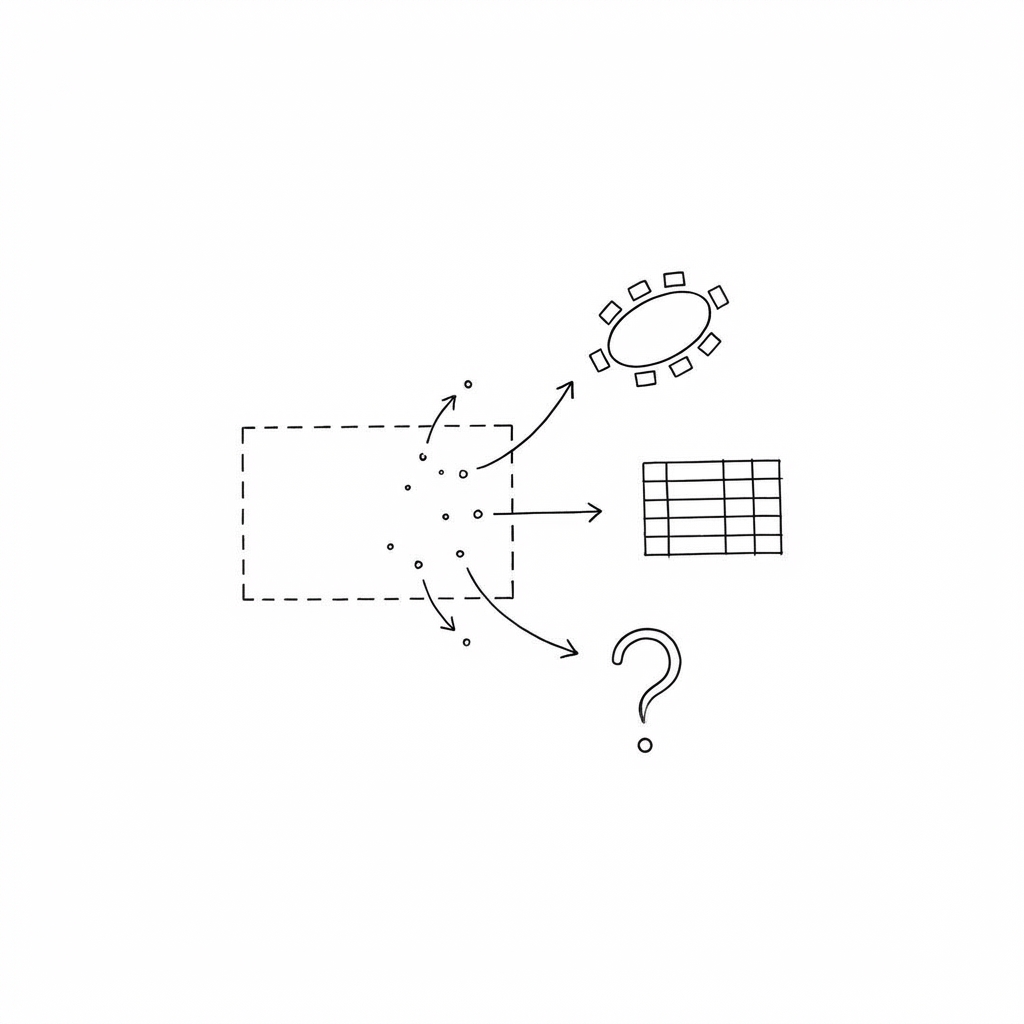
“They build dashboards for us, and then we do nothing with them.” The same feedback from operators in different industries.
Not because the dashboards are bad. A dashboard shows you that a number is red. It doesn’t tell you why, or what to do about it. People look at dashboards, notice problems, and then the synthesis process begins anyway. Pull additional context. Schedule a meeting. Build a spreadsheet that combines what the dashboard shows with what it doesn’t.
When the constraint was “we can’t see what’s happening,” dashboards were the right tool. When the constraint is “we can see what’s happening but can’t process it all into decisions,” they aren’t enough.
The cost
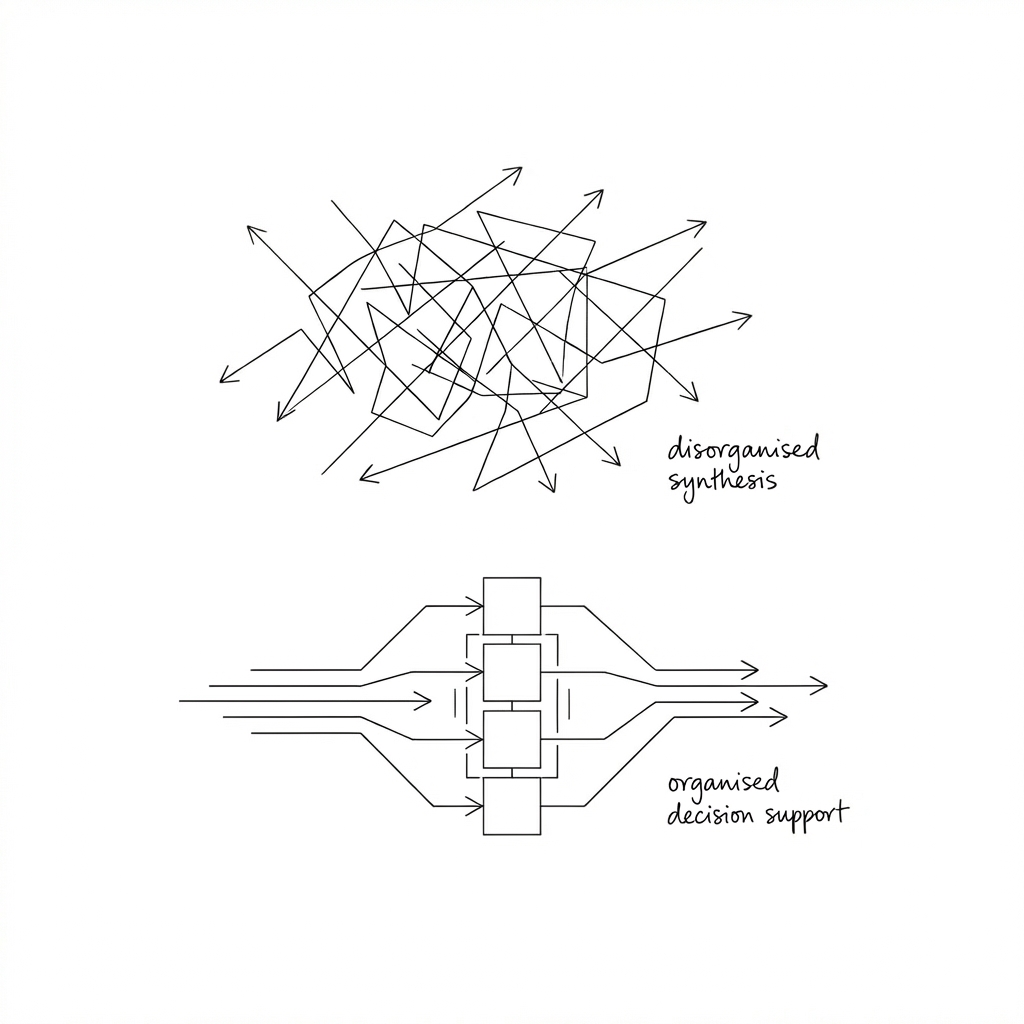
The synthesis bottleneck has real costs, even if they don’t show up on a balance sheet.
Speed. Competitors who can evaluate opportunities faster will capture them first. The time between “we should look into this” and “here’s what we’re doing” is a competitive variable.
Quality. Decisions made on gut feel or incomplete evidence are, on average, worse than decisions made with proper synthesis. The errors compound.
Talent. Your best people spend their time on synthesis work that doesn’t require their full capability. They’re overqualified for the task but necessary because no one else can do it.
Resilience. When synthesis capability concentrates in a few individuals, the organisation is fragile. People leave. People get sick. People go on holiday. The bottleneck becomes a single point of failure.
These costs are largely invisible because they’re opportunity costs. You don’t see the decisions that took too long, the opportunities that went to competitors, the talent that burned out on work beneath their capability.
The question
Organisations have more data than ever, better tools for storing and visualising it, and yet decisions still feel slow. The bottleneck moved, but it didn’t disappear.
The question is whether there’s a different approach. Not better dashboards. Not more analysts. Something that changes the scaling dynamics of synthesis itself. That requires rethinking how we build data systems and what we expect AI to do for us.